


From the marketing desk
Welcome to the January edition of Behind the Wheel for 2026 and as you’d expect, we’ve hit the ground running.
Much of the month was spent preparing for trade shows. Our Retail team attended NADA in Las Vegas on 04 February, and our Leasing team was at the Warsaw Fleet Expo on 03 February. Many came to our stand in Warsaw and those in the U.S. got to have personal meetings with our team on the ground.
On the product side, Automotive broke the news that quadricycle registration volumes are now available in JATO Volumes. As urban space is becoming more limited and the push for stricter emissions regulations takes hold, prepare to see more of these ultra compact cars on our roads. More on that later.
Of course, there’s so much more in this edition.
Yours in motoring,
Mark Talmage-Rostron
Content Lead

JATO in the news
We’ve hit the headlines a lot this month, being featured in some of the most recognisable online publications.
Wired recently investigated why new cars were so thin on the ground at the recent CES auto show in Las Vegas. Our Senior Consultant on the Advisory team, Daniele Ministeri puts it down to Chinese OEMs being so far ahead in software that Western makers are struggling to keep pace. Read more.
Bloomberg also picked up on our data that Rolls-Royce has ramped up the production of custom cars as demand for its Spectre EV vehicles are in decline. As demonstrated by JATO data in the article. Suggesting that even billionaires are reluctant to buy EVs. Discover why.

OEM news
The big news this month was the update of JATO Volumes to include quadricycle registration data across key European markets. Quadricycles represent a growing segment in European markets, driven by urbanisation, congestion, and strict emissions regulations.
If you're licensed in Spain, Italy, and the UK, the quadricycle registration data will appear automatically in V5 and JATO Net. This expands your view of the urban mobility segment with registration tracking for an additional vehicle category. Request more information.
France and Germany will be added in the coming months, so look out for news on that.

Advisory news
The first blog to come out has a U.S. focus. It documents that in California, Battery Electric Vehicle (BEV) sales have dipped for the first time since the pandemic affected the market in 2020.
That might be in California, but in other Zero Emissions Vehicle states, BEV sales volumes are improving. Throughout the September of last year, 18 states accounted for 57% of new BEV sales despite representing just 35% of the U.S. population and 36% of new vehicle sales. Get the insight.
There will be new Advisory reports released in February, so watch out for them in the Resources area of our site.

Retail news
January has been dominated by launches. We now have build data available with our VIN-decoding tool in the U.S. Unlike basic decoders that rely on variable or inferred data, this delivers consistent, verified insights for precise valuations and optimised listings. Get the full picture.
That’s not the only launch we’ve been busy with. We will imminently be launching VINView Pro in France, Germany, Italy and Spain. As per our U.S. tool, VINView Pro goes beyond basic VIN decoding in that from a single VIN lookup it delivers complete, accurate and consistent build data, so you can appraise, list and sell with confidence. Benefit here.

Leasing and fleet news
Our Leasing team attended the Warsaw Fleet Expo on the 3rd of February. It proved to be a key event for the team as they met with current and potential customers as we look to expand our presence within the Eastern European market.
Helen Fisk, Frederic Lopes and Oliver Abel were on our stand to discuss our leasing data solutions and how they help make every stage of a fleet’s lifecycle efficient and cost-effective.
What was even more exciting was that our own Oliver Abel was on the Trend Panel discussing the growth of the electric vehicle market and rise of Chinese brands.
Professional Services news
Financial institutions have committed to more sustainable investments. But without consistent vehicle level emissions data, it becomes difficult to compare manufacturers, assess transition risk, or track genuine progress towards net zero commitments, particularly given the complexity of the automotive sector.
Unpacking the solutions, our own Abdul Kadir, JATO’s Business Development Manager for Professional Services, has penned a fascinating blog where he discusses how financial institutions can bridge the critical data gaps. Get the insight.

Overview of local markets
As an established global company operating across 51+ countries, it stands to reason that there will be a lot happening in all the geographies that we have a presence in. That ongoing activity has brought about the aggregation of a lot of meaningful and actionable data that will be beneficial for you and your business. We’ve been busy putting together an overview of the regions we operate across, so read on to see what has been happening across Europe, Asia Pacific, and The Americas this month.
Europe
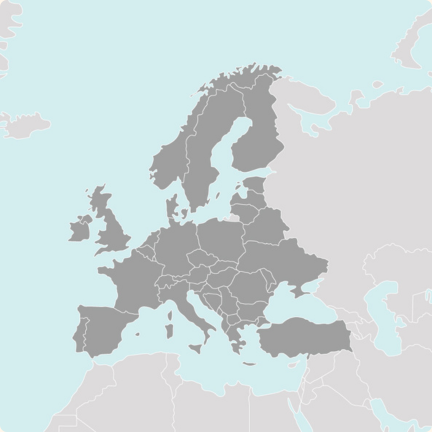
Recently, the European Automobile Manufacturers’ Association (ACEA) concluded negotiations for a free trade agreement (FTA) between the EU and India. The successful end to negotiations is a landmark moment in global trade relations. The FTA is a statement of intent by both parties to furthering more open and mutually beneficial trade relations.
The agreement is considered to greatly help European automobile exports enter a market of more than four million passenger cars that, until now, has been protected by prohibitively high import tariffs of up to 110%.
This FTA, however, comes with important restrictions such as quota limitations and residual tariffs that will limit the potential benefit. A full assessment of the detailed terms of the deal will begin once the texts are published in the coming weeks.
ACEA members support this FTA and will ask EU member states and the European Parliament to give their timely approval to allow for its implementation as soon as possible.
In 2025, new EU car registrations increased by 1.8% compared to the same period last year. Overall volumes remain well below pre-pandemic levels. The battery-electric car market share reached 17.4%, yet still a level that leaves room for growth to stay on track with the transition. Hybrid-electric vehicles lead as the most popular power type choice among buyers, with plug-in hybrids consolidating their position in the market.
January to December 2025 figures also showed new EU hybrid-electric car registrations rising to 3,733,325 units, driven by growth in the four biggest markets: Spain (+23.1%), France (+21.6%), Germany (+8%), and Italy (+7.9%). Hybrid-electric models account for 34.5% of the total EU market.
Registrations of plug-in-hybrid electric cars continue to grow, reaching 1,015,887 units during the same period. This was driven by increases in volume for key markets such as Spain (+111.7%), Italy (+86.6%), and Germany (+62.3%). Therefore, plug-in-hybrid electric cars now represent 9.4% of EU car registrations, up from 7.2% last year.
Turkey is emerging as a big market when it comes to electric vehicle purchasing. BEVs made up 16.7% of new car sales in the country in 2025, just behind the EU’s 17.4%, recently published registration data showed. While uptake is lower than in the Netherlands or the Nordics, where BEVs make up 35% to 96% of new cars sold, sales in Turkey have raced ahead of almost every country in southern and eastern Europe.
Analysts attribute the boom to a disparity in Turkey’s special consumption tax, which has left electric cars only slightly more expensive than comparable petrol cars. Sales remained high even after the government raised taxes on electric vehicles in August.
The Turkish government does not have a dedicated electric vehicle strategy but has championed a domestic carmaker, Togg, which in 2024 overtook Tesla as the country’s leading EV seller. Earlier this month, Togg’s board chair, Fuat Tosyalı, announced plans to increase production from 40,000 cars in 2025 to 60,000 in 2026.
.jpg)
Asia Pacific
Car production in Thailand in December rose 8.56% from a year earlier while domestic car sales also jumped due to growing demand for electric vehicles, the Federation of Thai Industries recently said.
For the whole of 2025, car production dipped 0.9% to around 1.455 million units, the federation confirmed. Car production is expected to rise to 1.5 million units this year, including 550,000 units for domestic sales and the rest for exports. Thailand is Southeast Asia's biggest auto production centre and an export base for some of the world's top carmakers, including Toyota and Honda.
Thailand's domestic auto sales jumped 39.07% on the year in December and rose 8.47% to 621,166 units for the whole of 2025. Car exports increased 11.29% year on year in December but dropped 8.19% to 935,750 vehicles in the year as a whole, the federation said.
As India prepares to present its Union Budget 2026 on February 1, the country’s automotive industry is calling on the government to introduce targeted incentives for entry-level electric vehicles (EVs). The appeal reflects growing concern that affordability pressures at the lower end of the EV market could slow down adoption, despite strong overall growth in electric mobility.
Brands such as Tata Motors have formally urged the government to allocate budgetary support for entry-level EVs and to extend incentives for electric cars and support for commercial electric cars used in the fleet segment under the PM E-DRIVE scheme, to be presented for the financial year 2026-27. However, industry experts warned that entry-level EVs remain under pressure, partly because lower petrol car prices have intensified competition.
US President Donald Trump earlier in January announced that he will raise duties on South Korean imports, including automobiles, from the current 15% level agreed in July 2025 to 25%. The move would undoubtedly give Japanese exports an edge over rivals Hyundai and Kia. The higher tariffs would also add cost for other automakers, including General Motors which imports the Chevrolet Trax and Trailblazer and two Buick crossovers from South Korea.
The increase came about as Trump said South Korean legislators had yet to enact and formally approve the trade agreement, so would increase the tariff percentage as a result.
The Americas
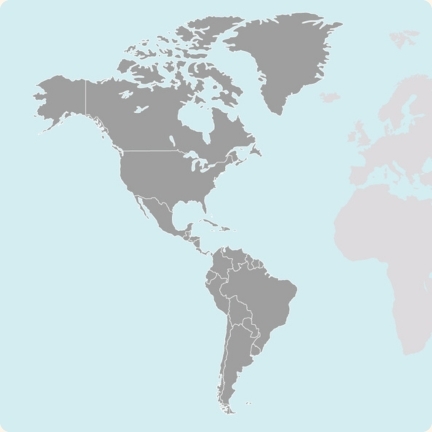
Volkswagen AG’s plans for a possible Audi factory in the U.S. aren’t progressing as President Trump’s tariffs weigh and talks for local incentives haven’t yielded results, Chief Executive Officer Oliver Blume recently announced.
Europe’s biggest carmaker had considered adding a second American manufacturing site on and off for some time, including dating back to 2018 during Trump’s first presidency. Talks for an Audi plant have been ongoing, initially encouraged by subsidies making an investment economically viable.
Plug-in hybrids, already only a sliver of the U.S. new-vehicle market, are set to become even more scarce after market leader Stellantis cancelled its full North American line-up. Instead, automakers are increasingly turning to traditional hybrids that don’t have a plug and extended-range vehicles, which also eases anxiety about needing to recharge but with less cost and complexity.
Plug-in hybrids aren’t likely to disappear entirely in the U.S., but a looser regulatory environment now makes them less necessary than when automakers were planning for emissions targets to keep getting stricter every year.
To formalise Canada’s new Canada-China partnership, Prime Minister Mark Carney earlier in January visited Beijing and met with the President of China, Xi Jinping, the Premier of China, Li Qiang, and the Chairman of the Standing Committee of the National People’s Congress of China, Zhao Leji.
The new partnership will focus on energy, clean technology and climate competitiveness. As part of the deal, Canada will allow up to 49,000 Chinese electric vehicles (EV) into the Canadian market, with the most-favoured-nation tariff rate of 6.1%. This amount corresponds to volumes in the year prior to recent trade frictions on these imports (2023-2024), representing less than 3% of the Canadian market for new vehicles sold in Canada.
It is expected that within three years, this agreement will drive considerable new Chinese joint-venture investment in Canada with trusted partners to protect and create new auto manufacturing careers for Canadian workers and ensure a robust build-out of Canada’s EV supply chain.
Behind the
wheel Newsletter
Subscribe to our monthly newsletter to get the latest industry news sent straight to your inbox.
Every month, we bring you a round-up of industry updates, including:
- Automotive markets overview
- Retail news
- Leasing news
- Professional services news