


From the marketing desk
Is it the end of Q1 already? Time flies when you’re hard at work supplying class-leading data to the automotive industry across all four corners of the globe.
Our much-anticipated European passenger car volumes press release hit the airwaves. Interestingly, although a total of 953,290 units were registered across Europe-28, it was not enough to save certain countries as both Germany and France recorded a decrease of 6.6% and Spain 3.1%. See who the winners and losers are later.
Our Head of Retail, Paul Hilton took to the keyboard and wrote a very interesting piece titled, ‘The missing link in AI for used vehicle workflows’. More on that in the Retail news.
There was also a fascinating blog on the true cost of owning a vehicle in Mexico written by Victor Lozano from our Advisory team. See the costs.
As always, that’s just the beginning, read on for more valuable insights from the world of JATO.
Yours in motoring,
Mark Talmage-Rostron
Content Lead

JATO in the news
Month by month we are featured in global automotive online publications and March was no different.
Autocar Professional picked up our India February passenger vehicle registrations press release, where we reported that the country registered 413,300 passenger vehicles. Strong growth with a 33.8% increase year-on-year. Discover the leaders.
In even bigger news, Fleet World were quick to seize on the news that both JATO and autobiz have entered into a partnership that’s designed to deliver the most comprehensive vehicle identification and valuation solution across 22 European markets. The result is a unified ‘specs-to-valuation’ framework that tracks a vehicle’s entire lifecycle, from the moment it leaves the factory to its eventual sale on the used market. Read about it.

OEM news
In March our team held a user workshop for Toyota in Belgium. The session focused on helping their teams get more from JATO data and our products. Training like this plays an important role in supporting our OEM customers and our account and customer success teams are always available to help with everything from understanding data to making the most of our tools.
Monthly Payments featured prominently in March. The solution allows OEMs to receive weekly updates on retail and business finance offers in their market, as well as track changes to deposits and APR to support faster market adjustments, without the need for manual data gathering. Access 30-day trial.

Advisory news
Mexican drivers purchased about 1.6 million vehicles in 2025, including 434,000 sedans. Buyers are looking beyond the initial price and weighing the full cost of ownership from fuel and insurance to maintenance and financing. So, what is the true cost of owning a car in Mexico? Find out.
Want to know why Norway continues to set the global benchmark for BEV adoption or why India’s passenger vehicle CO₂ results reveal a widening CAFE III compliance gap? Find out more about others by visiting the APAC LinkedIn page on a regular basis.

Retail news
Our latest expert blogger Paul Hilton delivered a sharp reminder that in the age of automotive AI, “good enough” data is a costly mistake. Synthetic inputs create expensive errors in valuation, pricing, and underwriting, making complete JATO data accuracy essential. Understand why.
Paul was also busy joining an expert panel on a Cox Automotive Europe podcast, where they discussed the surge of new automotive entrants and how changing consumer attitudes are reshaping dealer strategies. Catch the full conversation soon.
We also attended Faconauto, where our own Alejandro Jiménez Aparicio chaired a workshop and Salvatore Tancredi hosted a fascinating presentation. Find out more.

Leasing and fleet news
March was event time and the team were present at top industry events across Europe. We attended Flotauto in Paris where we welcomed attendees to our stand. Those who stopped by were treated to a demonstration on how JATO’s insight can help them operate smarter and faster.
We also attended Fleet Europe Turkey as a conference speaker. Our global head of sales, Jesper Rolink, delivered a presentation sharing data-led insights on the impact of Chinese brands entering the Turkish fleet market, and how local players can respond.
And we launched VAN Finder, an exciting new online search, selection and comparison tool designed to streamline the light commercial vehicle ordering process for Leasing and Fleet Management companies. Request a demo.

Professional Services news
The Professional Services team consisting of David Di Girolamo, Helen Fisk, Abdul Kadir and Damiano Minervini were also present at a couple of events in March.
At the Neudata Summit London we welcomed a host of people to our stand, keen to understand how our data can help them understand, navigate, and make better investment and strategic decisions in a rapidly evolving automotive market.
Data is only as valuable as the insight you extract from it so make sure that you contact the team to find out how you can access granular data and insights to improve the accuracy of your emissions assessments.

Overview of local markets
As an established global company operating across 51+ countries, it stands to reason that there will be a lot happening in all the geographies that we have a presence in. That ongoing activity has brought about the aggregation of a lot of meaningful and actionable data that will be beneficial for you and your business. We’ve been busy putting together an overview of the regions we operate across, so read on to see what has been happening across Europe, Asia Pacific, and The Americas this month.
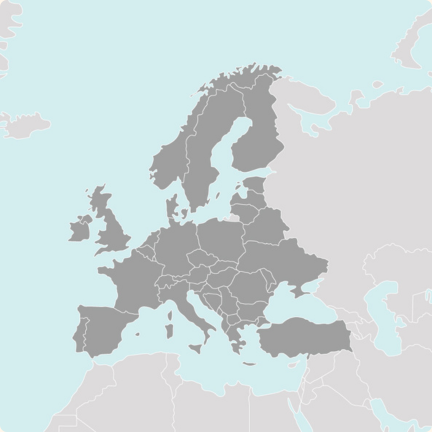
Europe
EU passenger-car registrations for January-February 2026 were down 1.2% year-to-date (YTD), according to ACEA. Within that, the powertrain mix continued to rotate: battery-electric vehicles reached 18.8% share (up from 15.2% a year earlier), hybrids captured 38.7%, and the combined petrol/diesel share fell to 30.6% (down from 38.7%). Plug-in hybrids reached 162,751 units in the first two months and represented 9.8% of registrations (up from 7.4% a year earlier).
According to Bloomberg European car sales strengthened moderately in February 2026, rising 1.7% YoY to 979,321 units, supported by expanding EV offerings and renewed subsidy programs in key markets. Within the EU alone, February registrations rose 1.4% to 865,437 units. Growth was driven primarily by Germany, Spain, Italy, and the UK, while France posted a significant 15% decline in registrations. OICA confirmed that European new car sales returned to growth in February, marking the first meaningful rebound after months of stagnation and that electrified vehicles (BEV, PHEV, HEV) now account for roughly two thirds of all new registrations, highlighting continued structural transition despite price and supply pressures.
S&P Global, reported that Europe faces new downside risks for the remainder of 2026 due to the escalation of the Iran conflict, which has driven up oil and precious metal prices. Rising input costs and destabilised logistics are prompting analysts to revise European demand downward. S&P Global Mobility forecasts production cuts of 82,000 units (2026) and 176,000 units (2027) for the region. Imports from China are also expected to climb, further intensifying the competitive landscape.
European OEM financial headlines in March were dominated by margin compression and recalibrations:
-
Porsche AG, for example, announced two major charges totalling €3.9 billion, wiping out 98% of its automotive operating profit for 2025, according to EuroNews.
-
Reuters reported that Volkswagen’s 2025 operating profit more than halved to €8.9 billion, with group revenue flat at €322 billion.
-
Bloomberg reported that BMW expected an automaking margin of 4%-6% (after 5.3% the prior year), citing tariffs and intensified competition in China as key constraints.
European demand vulnerability in the coming quarters is further tied to energy price volatility, inflation pressures, and the geopolitical uncertainties that risk curbing consumer confidence. Market watchers note that although EV penetration is rising, the recovery path for the region in 2026 remains fragile.
.jpg)
Asia Pacific
According to Bloomberg, China continues redefining global automotive norms through its high‑velocity EV development cycles, software‑centric design philosophy, and cost‑driven innovation. The ability of Chinese OEMs such as BYD, Geely, Xiaomi, and Leapmotor to deliver remote software fixes within hours, compress development timelines, and integrate supply chains end‑to‑end has become the industry’s new performance standard - dubbed “China Speed.”
Automobility addressed that market conditions in early 2026 remained uneven. Chinese auto sales fell sharply at the start of the year, with Jan-Feb volumes down ~22.9% YoY as government subsidy reductions and Lunar New Year timing pushed purchases into late 2025. However, exports became the stabilizing force: February exports hit a record 37% of total production, with NEVs accounting for ~43% of outbound shipments, reinforcing China’s role as the world’s EV export engine.
SAIC's MG brand announced that its “SolidCore Battery” is now the world’s first mass‑produced semi‑solid‑state battery, claiming improved driving range, faster charging performance, enhanced low‑temperature behavior, as well as higher safety and longevity.
Skoda announced it will withdraw from China withdraw from China by mid-2026 after struggling to compete in the EV transition; China had been Skoda’s largest market (deliveries above 300,000 in 2016-2018) but sales fell to just 15,000 in 2025. Skoda indicated it would prioritise growth in India and Southeast Asia.
Manufacturers in Japan and Korea are facing production and export disruptions due to shipping route complications tied to the Iran conflict. S&P Global reports Japan’s production forecast cut by 81,000 units in 2026, with additional reductions expected through 2031. South Korea is also set to see a production decline of 34,000 units due to weakened demand and higher fuel prices.
S&P Global's March 2026 production forecast explicitly incorporated conflict-related deterioration. It reduced Greater China’s production outlook by 116,000 units for 2026 (and 94,000 for 2027), citing weaker domestic demand and seasonal disruption, while noting that exports remained relatively strong (though Middle East shipments are impacted). It also reduced South Asia’s outlook by 71,000 units for 2026 (and 60,000 for 2027), citing ASEAN volatility and India’s LNG supply disruption issues (including Qatar-linked gas constraints) as well as broader supply-chain risk.
Overall, the Asia Pacific region continues to steadily shift toward electrification, albeit unevenly. Chinese OEMs are aggressively building global presence while Japan and Korea cautiously reposition toward hybrids and hydrogen technologies, and Southeast Asia accelerates adoption through cost driven EV preference..

The Americas
The March 2026 outlook for North American automotive markets reflects a mix of economic stimulus effects and geopolitical instability. According to Cox Automotive's Q1 2026 Industry Insights, U.S. vehicle sales and valuations have been buoyed by tax refund season, though the Middle East conflict has reversed some earlier positive momentum. Elevated fuel prices continue to strain consumer affordability, functioning as a “regressive tax.”
EV momentum in the U.S. is entering what analysts describe as an “EV winter.” Reuters’ global EV registration story reported that North America contracted by 35% in February to under 90,000 EVs sold (fifth consecutive monthly decline), attributing the downturn (in part) to the end of a U.S. EV tax credit scheme in September 2025 and policy proposals to further cut CO₂ standards. Bloomberg reports that while EVs reached record global sales in 2025, 2026 will see slower growth, with U.S. passenger EV sales forecast to contract by 15% due to subsidy withdrawals, relaxed fuel economy standards, and waning consumer appetite. Prominent carmakers are adjusting strategies accordingly. As an example, Bloomberg referred to Ford taking a $19.5 billion charge in December to transition its F 150 Lightning from full EV to extended range hybrid, signaling a broader U.S. market pivot toward hybrids.
North America faces weakening outlooks for 2026. S&P Global projects a decline of 590,000 units in total sales across the region, with the U.S. specifically impacted by early purchase pull ahead behavior and demand softening. Mexico is expected to see an even steeper drop of more than 8.7%, equal to about 137,000 units.
At the same time, PWC highlighted that domestic manufacturing realignment continues as OEMs shift production back onshore to mitigate tariff volatility and supply chain risk. More than 55% of vehicles sold in the U.S. are now produced domestically, a figure expected to rise further. Hybrid offerings continue to see growing adoption as consumers seek lower up front prices and better total cost of ownership.
Overall, the Americas remain a region in flux, caught between slowing EV adoption, resilience in hybrid demand, tariff driven manufacturing realignments, and macroeconomic volatility.
Behind the
wheel Newsletter
Subscribe to our monthly newsletter to get the latest industry news sent straight to your inbox.
Every month, we bring you a round-up of industry updates, including:
- Automotive markets overview
- Retail news
- Leasing news
- Professional services news